


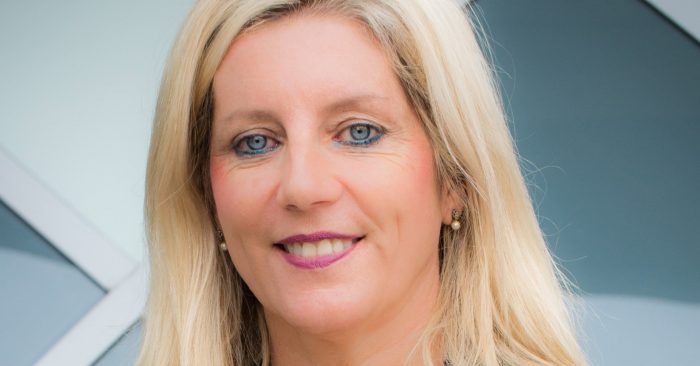
Through a series of portraits, Le Courrier Australien takes a look back at the careers of several winners of the French-Australian Excellence Awards. With over three decades of experience in advancing therapies for skin diseases, Dedee Murell is today a dermatologist whose work is acclaimed worldwide. Her contribution to the profession, her international profile and her fight for greater recognition of women in the field have earned her an award in the “Research and Innovation” category in 2024.
A clinic, situated in the walls of a former parish, a stone’s throw from St George Hospital in the Sydney suburb of Kogarah, was shared by her husband, orthopaedic surgeon George Murell. It’s here that Dedee Murrell has been developing and applying her knowledge for years, after a particularly rich international career, but one that wasn’t destined to land her here. “You can blame it on my husband!” jokes the woman who has now made Australia her home.
In a family environment with French, British and Irish accents, young Dedee Murrell was inspired by her mother, herself in the medical profession: “but I had no intention of following in her footsteps,” she explains. “I thought I wanted to become a teacher like my grandmother, but I remember that when I was little, I would always sneak a peek at my mother’s books lying around. I was always the one attracted by those books and those pictures.”
Dedee Murrell embarked on her medical training at Cambridge and Oxford Universities, where she developed a passion for the field of dermatology. “I loved every clinical experience I had at Oxford, but when I started working in dermatology, I didn’t realize how much I was drawn to visual things. I loved being able to see the diseases I had to treat.“
Going abroad
This ambition led her to travel the world. Dedee Murrell decided to leave the UK for New York, where she became a dermatology intern. A decision she sees as transformative: “I had very few life experiences outside my home country, so I decided to take a gap year. The experience changed my life, I made some extraordinary friends and, every summer, I found a new excuse to return to the United States.”
In particular, she joined Rockefeller University, which specializes in medical and scientific research, where she studied under renowned professors and dermatologists. But just when Dedee Murrell thought she was settling down for good, a meeting with the man who was to become her husband turned things upside down once again. “It was a very difficult decision to make,” she admits. “George was being courted all over America, but became aware of a job offer as Professor of Orthopaedics at St George’s Hospital in Sydney. I told him, ‘I’m not moving until I have an academic opportunity there’. He then asked the hospital if they were looking for a dermatologist, and they said yes.”
16,000 kilometers and some twenty hours by plane later, Dedee Murrell crossed the planet once again, without putting her professional ambitions on hold. The young woman has to discover a medical environment still in its infancy, in a country under construction on every level.
Practicing in Australia
In 1995, the year of the couple’s arrival, Australia’s medical infrastructure, particularly in dermatology, was not yet at the same stage of development as its counterparts around the world. For Dedee Murrell, the road is paved with challenges, and there’s still a long way to go before she becomes the first fully-fledged female professor in the field on the Oceanian island.
“I had to go back a few years and do a further two years’ training before I could regain the status I had in the US, going from assistant professor to senior lecturer. And I received no start-up funding, other than a salary for the position.” In 2008, 13 years after her arrival, the young woman became a professor, making history in the process.
But nothing was a foregone conclusion. “On the whole, and even if the situation is improving today, public hospitals don’t fund dermatology at all compared to England, Europe, America and even Asian countries. So the main difficulty is getting grants, because most of them are focused on skin cancer, so people tend to be interested in that, because that’s the area that gets funded. So I had to show initiative and find other sources of funding to carry out the research I wanted to do.“
Dedee Murrell decided to set up a charitable fund, a foundation for blistering diseases, whose profits could be reinvested in research. “It’s all about being enterprising,” notes the professor. At this point, the machine is set in motion.
Unprecedented progress
In a career spanning more than 30 years, Dedee Murrell has spearheaded a host of dermatology initiatives, including the founding of a clinic for adults and children, Australia’s first dedicated dermatology clinical trials center, and a blistering disease laboratory. “I’m very proud of the center, because at the time, I had very little experience in this sector, but I could see what was being done in America. And it was very difficult at first. I tried to found it through the hospital, but it didn’t work. I tried to set it up through the university, but it didn’t work. In the end, I had to opt for an off-site clinical trials center, where you are responsible for everything, from the budget to the staff.”
Dedee Murrell is always on the lookout for funding to further scientific progress, and also becomes president of the Australian Blistering Diseases Foundation – which focuses on research into the treatment of blistering diseases: “thanks to the many donations we’ve received, some from people I knew, others not, we’ve also been able to set up educational initiatives for our patients.”
On the medical front, the new facilities have made it possible to carry out a wide range of trials. “And not just for vesicular diseases,” adds Dedee Murrell. “But also new treatments for psoriasis, atopic dermatitis, vitiligo, alopecia – all the diseases we treat on a daily basis, and which we teach young people about.” With a medical desert still strongly present in Australia in the field of dermatology, collaboration and sharing with other establishments in the country are also at the heart of the professor’s work. “This has enabled us to diagnose and classify more cases and led to the creation of a registry, and then to the establishment of a national program that has helped fund care for these patients.“
Finally, at international level, Dedee Murrell is also the author of a number of definitions for vesicular diseases, as well as the outcome indicators used to measure improvement. These scores, along with other instruments, are translated into many languages and applied worldwide. Without these tools, many drugs would never have seen the light of day.
A status to assert
Through her actions, Dedee Murrell is also making her mark in the particularly male-dominated world of medicine. “When I was a medical student at Oxford, I went through all these specialties and rarely met any female consultants,” she admits. “I don’t think wanting to champion women in this field was a conscious thing. But when you think you’re capable of doing something in life, if you see that someone is a bit like you, it helps you achieve that goal and gives you more self-confidence. And that’s what I did with the few women I met in dermatology.“
In 2019, she received the International Pioneer Award from the Women’s Dermatology Society, recognizing her work in promoting the role of women in the field. A “pioneer” status that she hopes to see evolve rapidly: “I can already see a big change. I think I arrived at a time when there were starting to be more women than men in training in the United States. But when I arrived in Australia, that wasn’t the case. There were hardly any women, let alone a female president at university, and there are only a few today.“
Winner of the French-Australian Excellence Awards
In November 2024, Dedee Murrell was honored in the “Research and Innovation” category of the French-Australian Excellence Awards. A distinction that once again reinforced her status in the field of dermatology, the fruit of decades of work. “It’s not often that doctors in my position receive awards,” admits the professor, who was directly nominated by Laurent-Emmanuel Saffré, CEO of the Oceanian branch of French pharmaceutical company Pierre Fabre. “However, I was very flattered and honored to receive this award at the French Embassy, it’s a great achievement for me personally, I’m very grateful.“
A moment that punctuates a year full of achievements, and promising prospects for the future. At her clinical trials center, Dedee Murrell continues to set up innovative new medical programs, as she did a decade ago with “dupilumab”, a self-administered injection for atopic eczema, transforming the lives of many Australian patients.
The woman who forged her career and success by meeting new people and traveling has just one piece of advice: “When you’re young, that’s when you have the time to go abroad, discover different opportunities and make new connections. So don’t be shy, get in touch with the person you want to train with, and keep moving forward because it will help you change your life. Having a different perspective and multiple experiences is always very good in medicine“.




















Discussion about this post