


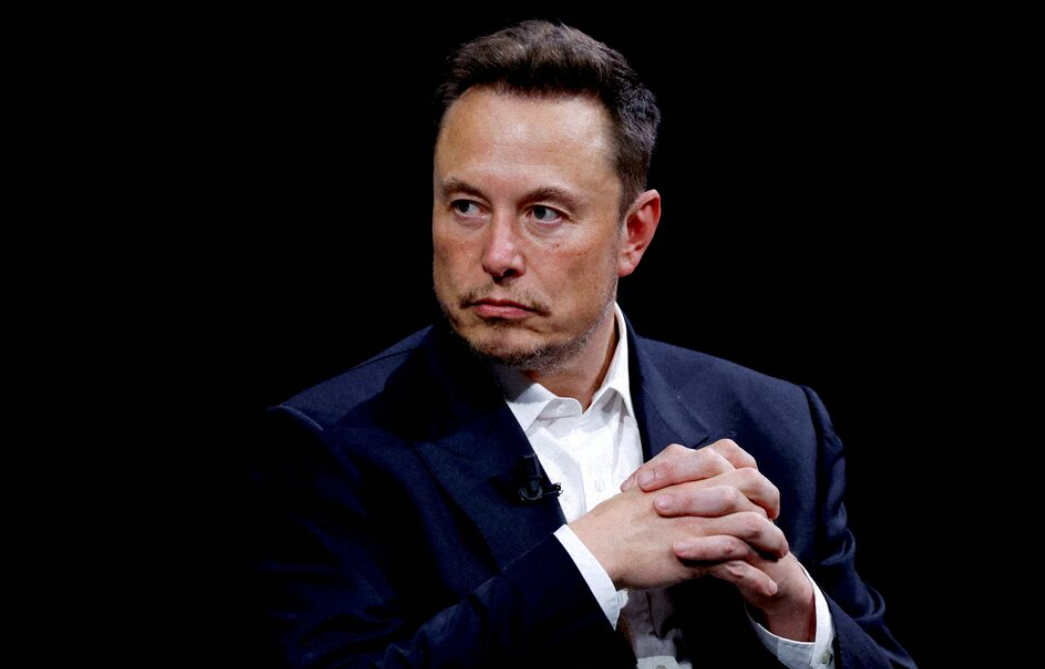
French authorities searched the Paris offices of Elon Musk’s X Tuesday, the latest sparks to fly as his freewheeling management of the social network clashes with European governments’ attempts to moderate online discourse.
Here is a roundup of the former Twitter’s worst recent troubles in Europe:
– Sexualised deepfakes –
In late 2025 and early 2026, X’s chatbot Grok was responding with realistic AI-generated images to users’ requests to “take her clothes off” or “put her in a bikini”.
Although Musk attempted to laugh off the scandal, outrage spread about the practice, which targeted celebrities, ordinary X users and other women and girls.
After a first move to restrict the feature to paying users, the platform ultimately blocked AI manipulation of images of real people in jurisdictions where it is illegal.
In late January, the European Union hit X with an investigation over the issue, ordering the company to preserve all documents relating to Grok until at least the end of 2026.
Under Europe’s powerful tech regulations, Brussels could theoretically fine X up to six percent of its annual global revenue.
Britain’s data regulator on Tuesday also announced an investigation into X and parent company xAI over the deepfakes.
– Political interference –
While Grok-created deepfakes were one of the reasons for French prosecutors’ Tuesday raid on X, the investigation was opened long before the scandal broke.
Authorities began their probe in January 2025 into potential manipulation of X’s algorithm for interference in French politics.
That probe led them to raid X’s Paris offices Tuesday and summon Musk and former X chief Linda Yaccarino for voluntary interviews in April.
X also remains under investigation by the European Union over tackling the spread of illegal content and information manipulation, including for the use of Grok to power its recommendation system deciding which posts users should see.
Musk has made no secret of his personal support for European far-right parties, especially the Alternative for Germany (AfD).
– Lack of transparency –
Brussels slapped a 120-million-euro ($140-million) fine on X in December for violating the transparency obligations of the EU’s powerful Digital Services Act (DSA).
The penalty emerged from the first formal investigation launched under the DSA in December 2023.
Breaches included the deceptive design of X’s “blue checkmark” for supposedly verified accounts, lacking transparency around advertising and failure to provide access to public data for researchers.
EU chiefs insisted they would enforce the bloc’s rules despite pressure from Washington.
– ‘Anti-woke’ Grok –
In mid-2025, posts widely shared in screenshots on X showed Grok praising Nazi leader Adolf Hitler, who oversaw the murder of six million Jews, and claiming Jewish people promoted “anti-white hate”.
There were also derogatory comments on Islam and insults directed at Turkey’s President Recep Tayyip Erdogan, which led a court there to ban the posts.
The EU said in July it was “in touch” with X over the chatbot’s responses, adding that it took them “extremely seriously”.
X later apologised for the offensive posts by Grok, saying they happened due to an update that prompted it to “reply to the post just like a human” as well as “tell like it is” and not be “afraid to offend people who are politically correct”.
Grok had previously ignited controversy by generating posts with unbacked right-wing propaganda about the supposed oppression of white South Africans that it termed “white genocide”.
France extended its probe into X to cover Grok’s posts, including for alleged Holocaust denial, which is illegal in the country and many other European nations.


















Discussion about this post